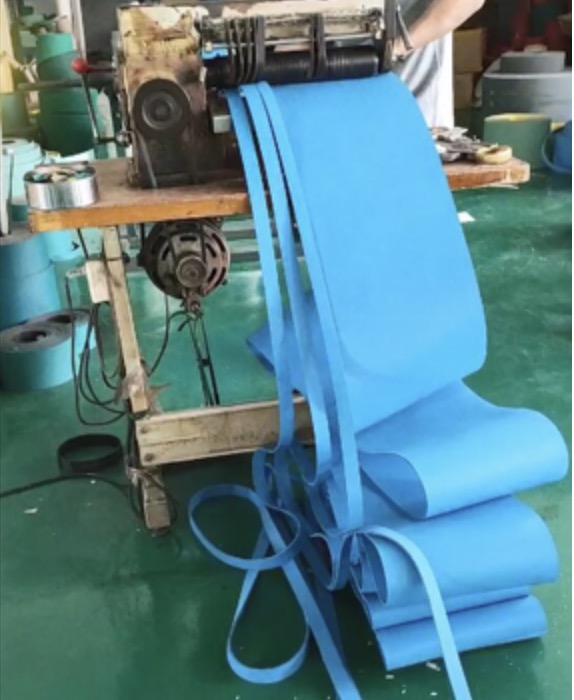
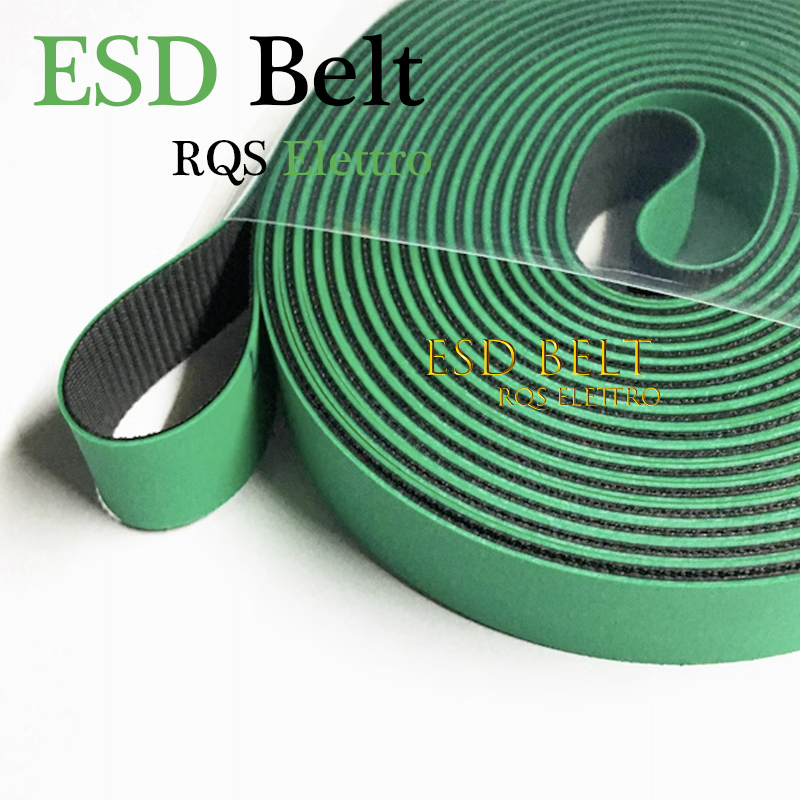
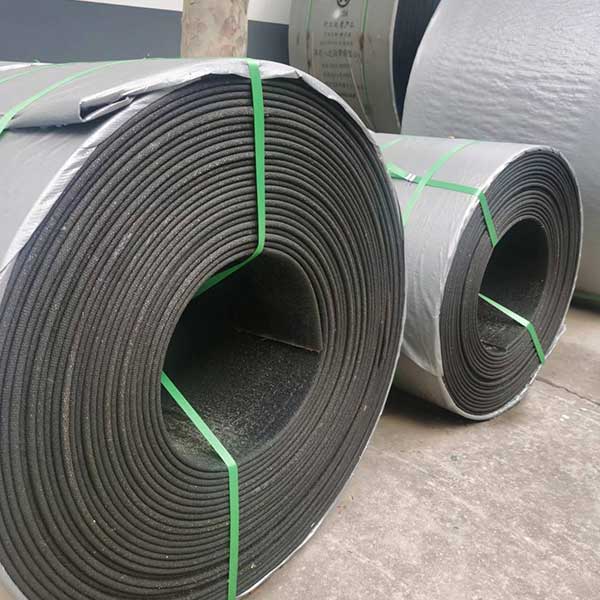
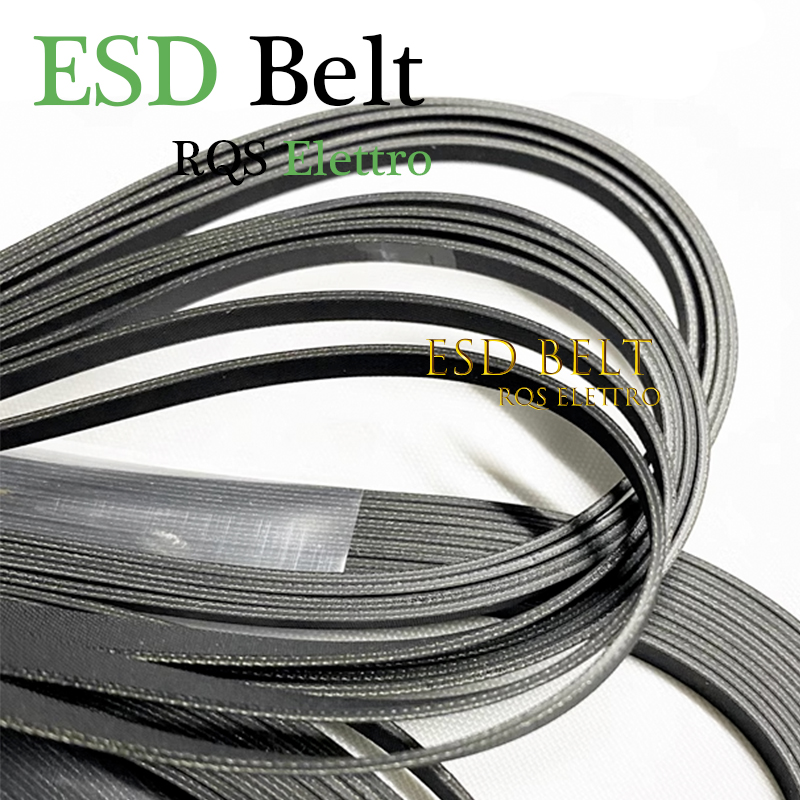
Belt pulleys, belonging to the category of hub parts, are generally relatively large in size, and the manufacturing process is mainly based on casting and forging.Generally, larger designs are designed using casting methods, and the material is generally cast iron (with good casting performance), while cast steel is rarely used (with poor casting performance of steel); Generally, smaller sizes can be designed as forged and made of steel. Belt pulleys are mainly used for long-distance transportationOccasions for transmitting power, such as small diesel power output, agricultural vehicles, tractors, automobiles, mining and mountain machinery, and machineryMechanical processing equipment, textile machinery, packaging machinery, lathes, forging machines, some small horsepower motorcycle power transmission, agricultural machineryPower transmission, air compressors, reducers, reducers, generators, embossing machines, etc.
Do you know where rubber belts are generally used?
Rubber belts are widely used in many different fields and industries. The following are some common applications of rubber belts:Transportation and transportation: Rubber belts are commonly used for material transportation and transportation, such as in mines, ports, construction sites, and other places for transporting materials such as ore, coal, sand, and cement.Electricity and energy: Rubber belts are used to transport materials such as fuel, ash, raw materials, and finished products, such as coal, fuel oil, natural gas, etc. in power plants.Metallurgy and Steel: Rubber belts are used for conveying and processing in ironmaking, steelmaking, and rolling processes, such as in blast furnaces, sintering machines, steel mills, and rolling mills.Agriculture and food processing: Rubber belts are also widely used in the agricultural and food processing industries, such as in agricultural irrigation systems for transporting water sources, and in food processing factories for transporting grains, vegetables, fruits, etc.Packaging and logistics: Rubber belts are used for conveying and transportation in the packaging and logistics industry, such as in logistics centers, warehouses, and packaging production lines for transporting packages, goods, etc.Automotive and Transportation: Rubber belts also have important applications in the automotive and transportation industries, such as in the transmission system of automotive engines, as well as in tire production and repair.Mining and quarrying: Rubber belts are used for material transportation and processing in the mining and quarrying industry, such as transporting ores, rocks, etc. in quarries, mines, and mines.Chemical and pharmaceutical industries: Rubber belts are also used in the chemical and pharmaceutical fields, such as for conveying chemical raw materials, pharmaceuticals, etc.Textile and Clothing: Rubber belts are used in production processes in the textile and clothing industry, such as conveying and transmission during spinning, weaving, dyeing, and printing processes.Printing and Packaging: Rubber belts play an important role in the printing and packaging industry, used to transport materials such as paper, cardboard, and cardboard, and are used for transmission and positioning in printing and packaging machinery.Medical equipment: Rubber belts are also used in the field of medical equipment, such as for transporting medical devices, drugs, and biomaterials.Environmental protection and waste treatment: Rubber belts are used for material transportation and treatment in the environmental protection and waste treatment industries, such as in garbage treatment plants, recycling centers, and other places for transporting and sorting waste.Sewage treatment: Rubber belts are also used in sewage treatment processes, such as for transporting sewage, sludge, and solid waste.Electronic product manufacturing: rubber belts play an important role in the transmission and positioning of electronic product manufacturing, such as the application in semiconductor production lines and electronic Assembly line.Sports and entertainment facilities: Rubber belts are used in sports and entertainment facilities, such as cable car systems in ski resorts and roller coasters in amusement parks.These are some common applications of rubber belts, but in reality, rubber belts have a wide range of applications in different industries and fields. Its advantages include wear resistance, chemical corrosion resistance, good elasticity, and long service life, making it an indispensable material conveying and transmission device in many industrial fields. According to specific needs and process requirements, suitable rubber materials, structural designs, and accessories can be selected to meet the needs of various application scenarios

What is a rubber belt
Rubber belt is a common type of belt made of rubber material. Here are some knowledge about rubber belts:
4 common knowledge about belts
Here are some common knowledge about belts:
The past and present lives of conveyor belts
A conveyor belt is a device used for transporting goods, materials, or other objects, and it plays an important role in the industrial and commercial fields. The following is a brief description of the past and present lives of conveyor belts:Historical origin: The history of conveyor belts can be traced back to ancient times. Early people used simple materials such as wood, rope, and leather to create primitive conveying systems for transporting heavy objects or goods. These primitive conveying systems have played an important role in fields such as agriculture, construction, and mining.During the Industrial Revolution: With the arrival of the Industrial Revolution, the demand for more efficient logistics and production methods gradually increased. In the late 18th and early 19th centuries, inventors began to develop and improve conveyor belt technology. The first to emerge was a manually operated conveyor belt system, which later developed into an automatic conveyor belt system using steam power and mechanical devices.Technological innovation: With the progress of science and technology, conveyor belt technology has been continuously improved and innovated. In the early 20th century, conveyor belt materials began to use more durable rubber and nylon to improve their strength and wear resistance. At the same time, the emergence of electric conveyor belts has made the conveying system more efficient and reliable.Application field expansion: The application field of conveyor belts has also been continuously expanded. In addition to industrial production, conveyor belts are widely used in fields such as logistics, mining, metallurgy, agriculture, construction, and food processing. They can be used to transport various items, such as coal, ore, grains, goods, and finished products.Automation and intelligence: With the development of automation and intelligence technology, conveyor belt systems are also constantly evolving. Modern conveyor belt systems are equipped with sensors, control systems, and automation devices, which can achieve precise material transportation, speed regulation, and automated control of production lines.Environmental and sustainability considerations: In recent years, attention to environmental protection and sustainability has also affected the development of conveyor belts. New materials and designs have been introduced to reduce energy consumption, reduce noise and vibration, and improve material recovery and reuse rates.Overall, conveyor belts, as an important material conveying equipment, have undergone long-term evolution and innovation. It plays a crucial role in modern industry, improving production efficiency, reducing labor costs, and promoting the development of logistics and supply chains. With the continuous progress of technology, we can expect conveyor belts to continue to develop in the future and respond to new challenges and demands.
8 points on the important role of rubber belts in the manufacturing process of electronic products
Rubber belts are essential components in electronic product manufacturing, enabling accurate transmission and positioning, ensuring accurate assembly of products and smooth operation of production processes. The following are 8 detailed descriptions of the application of rubber belts in electronic product manufacturing:Semiconductor production line: In semiconductor production lines, rubber belts are used to transport semiconductor chips between different process steps. They can stably transport wafers and wafers, ensuring their accurate position and positioning in different processing processes. Rubber belts have excellent friction characteristics and surface accuracy, ensuring accurate placement and movement of chips.Electronic assembly line: On electronic assembly lines, rubber belts are used to transfer electronic components, components, and circuit boards from one workstation to another. They undertake the task of transmission and positioning, ensuring the correct position and sequence of components during the assembly process. Rubber belts have wear-resistant, anti-static, and stable characteristics, which can operate stably for a long time on assembly lines.Conveyor belt system: In electronic product manufacturing factories, rubber belts are usually used in conjunction with conveyor belt systems to transport and transfer raw materials, components, and finished products on the production line. Rubber belts can operate stably in different working environments, have good tensile strength and wear resistance, and can effectively transport materials from one place to another.The application of rubber belts in the manufacturing process of electronic products can improve production efficiency, ensure product quality, and provide precise positioning and movement functions. They have good wear resistance, anti-static properties, and stability, and can adapt to high-speed operation and complex process requirements. In addition, rubber materials also have good insulation performance, which can provide electrical isolation and protection, ensuring the safety and reliability of electronic products.Battery manufacturing: In the battery manufacturing industry, rubber belts are used to transport the positive and negative electrode materials, separators, and other components of batteries to corresponding workstations. Rubber belts have the characteristics of corrosion resistance and chemical resistance, which can adapt to the special environmental requirements of battery production.Small electronic device assembly: During the assembly process of small electronic devices, rubber belts are used to transport and locate small electronic components such as chips, inductors, and capacitors. The high precision and stability of rubber belts ensure the accurate installation and alignment of these small components.3D printer manufacturing: Rubber belts play a crucial role in the manufacturing process of 3D printers. They are used to transport print heads, build platforms, and other critical components. The high precision and stability of rubber belts ensure the accuracy and reliability of the printing process, resulting in high-quality printing products.Electronic equipment testing: The application of rubber belts in electronic equipment testing is also common. They are used to transport and locate tested electronic products, such as chips, circuit boards, and components. The smoothness and accuracy of rubber belts are crucial for the accuracy and repeatability of the testing process. Rubber belts are widely used in the field of electronic product manufacturing, covering multiple process steps and key links. They play an important role in transmission, positioning, and assembly, and are crucial for improving production efficiency, ensuring product quality, and meeting specific needs. With the continuous progress of technology, the application of rubber belts will continue to develop and innovate to meet the constantly changing needs of electronic product manufacturing.
Characteristics of inverted triangular conveyor belt
Patterned (inverted triangle) conveyor belt, this type of conveyor belt has a unique shape, presenting a dense triangular shape that looks like serrations, and its pattern height is relatively high, so it is also known as a “serrated conveyor belt”. The inverted triangle conveyor belt is generally made of PVC material, and rubber material is rarely used, with a thickness of generally 8.5-15mm.This conveyor belt has the following characteristics:The temperature during use needs to be between -30 ° -85 °.
Model of Japanese Sanzhixing conveyor belt
Japan’s Three Star conveyor belt model NS82UFG0/2W-30X1436-E Japan Sanzhixing thin conveyor belt model: NS82UFHG0/2W-350 x 11700E MM serpentine wireJapan’s Sanzhixing thin conveyor belt model: NSMX001SKL-160-3549-EJapan MITSUBOSHI Three Star Conveyor Belt Model: NS82UFHG0/2W 350 x 11700E MM SerpentineJapan MITSUBOSHI Three Star conveyor belt model number: NS82UFG0/2W 3mm x 1436EJapan MITSUBOSHI Three Star Conveyor Belt Model: NS82UFG0/2W-30X1436-EJapan MITSUBOSHI Three Star Conveyor Belt Model: NS82VG5/5QG-50X1000000-E Japan Samsung thin belt model: NS82VG5/5QG-50mmX10mJapan Samsung thin belt model: NS82VG5/5QG-50X10000-EWidth 50 millimeters, perimeter 10 meters, thickness 2.5, green, with a circular bandJapan Samsung thin belt model: NS82VG0/5G-W600-L5000-AN Japan Samsung Belt Model: NS82VG0/5G-W600-L5000-ANJapan Samsung Belt Model: NS82VG0/5G-W600-L5000-EJapan Samsung thin belt model: NS82VG5/5QG-50mmX10M-E width 50mm, perimeter 10mJapan Samsung thin belt model: NS82VG5/5QG-50X1000000-E, width 50mm, circumference 10m, thickness 2.5, green, circular belt Model and specification: NS41UG2/2G-420W-323L-EModel and specification: NS41UG2/2G-355W-360L-EModel and specification: NS41UG2/2G-265W-318L-EJapan Samsung belt type fan NS183VN0/20W-45X877-E Japan’s Sanzhixing thin conveyor belt model: NS82UHG0/2G-270X7480-EJapan’s Sanzhixing thin conveyor belt model: NSMX001SKL-160-3549-EJapan MITSUBOSHI Three Star Thin Conveyor Belt Model: NS82UG0/5GS-95X3260-EJapan’s Three Star conveyor belt model: NS82UG0/5GS-95X3260-EJapan’s Three Star conveyor belt model: NS82UG0/5GS-W50XL5496-EJapan’s Three Star conveyor belt model: NS82UFG0/2W-40 * 1638-EJapan’s Three Star conveyor belt model: NS41UFHG0/2W 2984 * 50 E 3 PCSJapan’s Three Star conveyor belt model: NS41UFHG0/2W 2915 * 50 E 2 PCSJapan’s Three Star conveyor belt model: NS41UFHG0/2W 1162 * 50 E 2 PCSJapan’s Three Star conveyor belt model: NS41UFHG0/2W 1794 * 50 E 2 PCSJapan’s Three Star conveyor belt model: NS41UFHG0/2W 2544 * 50 E 2 PCSJapan’s Three Star conveyor belt model: NS41UHG0/2W 2984 * 50 E 3 PCSJapan’s Three Star conveyor belt model: NS41UHG0/2W 2915 * 50 E 2 PCSJapan’s Three Star conveyor belt model: NS41UHG0/2W 1162 * 50 E 2 PCS Japan’s Three Star conveyor belt model: NS41UHG0/2W 1794 * 50 E 2 PCSJapan’s Three Star conveyor belt model: NS41UHG0/2W 2544 * 50 E 2 PCSJapan’s Three Star conveyor belt model: NS41UG2/2G-156W-328L-E 3 PCSJapan’s Three Star conveyor belt model: NS41UHG0/2W 2984 * 50 E 3 PCSJapan’s Three Star conveyor belt model: NS82VG5/5G 50W-10000L-E 50 PCSJapan’s Three Star conveyor belt model: NS30FG-M-1024W-27500L-EJapan’s Three Star conveyor belt model: NS30FG-M-1024W-23500L-EJapan’s Three Star conveyor belt model: NS30FG-M-1024W-28000L-EJapan’s Three Star conveyor belt model: NS82UPG0/0G-800X1500-E 2 PCSJapan MITSUBOSHI Three Star Thin Conveyor Belt Model: NS82UG0/5GS-95X3260-E Japan MITSUBOSHI Three Star Thin Conveyor Belt Model: NS41UHG0/2W 1314 * 50 E 2 PCSJapan MITSUBOSHI Three Star Thin Conveyor Belt Model: NS41UHG0/2W 2984 * 50 E 3 PCSJapan MITSUBOSHI Three Star Thin Conveyor Belt Model: NS41UHG0/2W 3113 * 50 E 2 PCSJapan MITSUBOSHI Three Star Thin Conveyor Belt Model: NS41UHG0/2W 2479 * 50 E 2 PCSJapan MITSUBOSHI Three Star Thin Conveyor Belt Model: NS41UHG0/2W 1364 * 50 E 2 PCSJapan MITSUBOSHI Three Star Thin Conveyor Belt Model: NS41UHG0/2W 669 * 50 E 2 PCSJapan MITSUBOSHI Three Star Thin Conveyor Belt Model: NS41UHG0/2W 2244 * 50 E 2 PCSJapan MITSUBOSHI Three Star Thin Conveyor Belt Model: NS41UHG0/2W 2224 * 50 E 2 PCS Japan MITSUBOSHI Three Star Thin Conveyor Belt Model: NS41UG2/2G-355W-360L-E 7 PCSJapan MITSUBOSHI Three Star Thin Conveyor Belt Model: NS41UG2/2G-420W-323L-E 9 PCSJapan MITSUBOSHI Three Star Thin Conveyor Belt Model: NS41UG2/2G-415W-318L-E 3 PCSJapan’s Three Star conveyor belt model: NS41UR0/5G-485W-1920L-E 1 PCSJapan’s Three Star conveyor belt model: NS82UG0/0G-15X1980-E 2 PCSJapan’s Three Star conveyor belt model: NS82UKG0/8GT-20W * 5000L-E 1 PCSJapan MITSUBOSHI Three Star Thin Conveyor Belt Model: NS82UG0/2G-120X2215-E 1 PCSJapan MITSUBOSHI Three Star Thin Conveyor Belt Model: NS41UG0/0G-50X888-E 1 PCSJapan MITSUBOSHI Three Star Thin Conveyor Belt Model: NS41UG0/0G-30X2974-E 1 PCSJapan MITSUBOSHI Three Star Thin Conveyor Belt Model: NS82UG0/2BK-9W-1185L-EJapan MITSUBOSHI Three Star Thin Conveyor Belt Model: NS41UG2/2G-420W-323L-E 9 PCSJapan MITSUBOSHI Three Star Thin Conveyor Belt Model: NS41UG2/2G-355W-360L-E 4 PCSJapan MITSUBOSHI Three Star Thin Conveyor Belt Model: NS82UEG0/2G-150W-3500L-EJapan MITSUBOSHI Three Star Thin Conveyor Belt Model: NS41UG2/2G-420W-323L-E 10 piecesJapan MITSUBOSHI Three Star Thin Conveyor Belt Model: NS41UG2/2G-355W-360L-E 4 piecesJapan MITSUBOSHI Three Star Thin Conveyor Belt Model: NS41UG2/2G-265W-318L-E 1 piece
What are the advantages of PVC baffle conveyor belts?
With the development of society, industrial production efficiency is accelerating at present. Industrial belts include conveyor belt, Timing belt and sheet base belt. These industrial belts are used in the production lines of industrial production machines, especially the frequently used conveyor belts, which play an important role in the production line. There are many types of conveyor belts, including PVC conveyor belts, PU conveyor belts, PVK conveyor belts, rubber conveyor belts, etc. based on the material calculation. These conveyor belts can be specially processed according to the needs of the production line, and the processed conveyor belts can also be named according to the processing technology. For example, PVC conveyor belts are called PVC baffle conveyor belts. So, what are the advantages of PVC baffle conveyor belts? Next, let’s take a look together. For PVC conveyor belts with baffles, in many industries, the products conveyed need to be well separated and classified to prevent product accumulation. So, baffle conveyor belts can be used to prevent product accumulation and prevent slipping of materials.Advantages of PVC baffle conveyor belt: 1、 Increase the conveying angle of PVC baffle conveyor belt (30-90 degrees)2、 PVC baffle conveyor belt has a small footprint and low investment3、 PVC baffle conveyor belt has large conveying capacity and high lifting height4、 PVC baffle conveyor belt can smoothly transition from horizontal (or vertical) to inclined (or vertical)5、 PVC baffle conveyor belt is suitable for conveying powder, granular, small particle, paste and liquid materialsThe above is about the characteristics of PVC baffle conveyor belts. You can consider whether your industry is suitable for using baffle conveyor belts. In fact, no matter what conveyor belt it is, it is necessary to pay attention to maintenance work. For conveyor belts, as long as maintenance and upkeep are done well, it is necessary to make the conveyor belt durable and durable
Common knowledge on the use of PVC conveyor belts
PVC conveyor belts are one of the most popular types of conveyor belts, whether in the food, electronics, or hospital industries. Metallurgical and chemical industries also need them to transport items and improve enterprise efficiency. Do you know the common sense of PVC conveyor belts?Material of PVC conveyor belt:Polyvinyl chloride (PVC), composed of polyester fiber cloth and polyvinyl chloride adhesive, operates at temperatures ranging from -10 ° to+80 ° C and can be used in many industries.Characteristics of PVC conveyor belt:Lightweight, easy to process, wear-resistant, affordable, glossy, and easy to maintain, but with poor breathability and slip resistance, it will harden at low temperatures, resulting in poor bending and easy fracture. PVC has a variety of colors, suitable for summer fashion.Advantages of PVC conveyor belts: