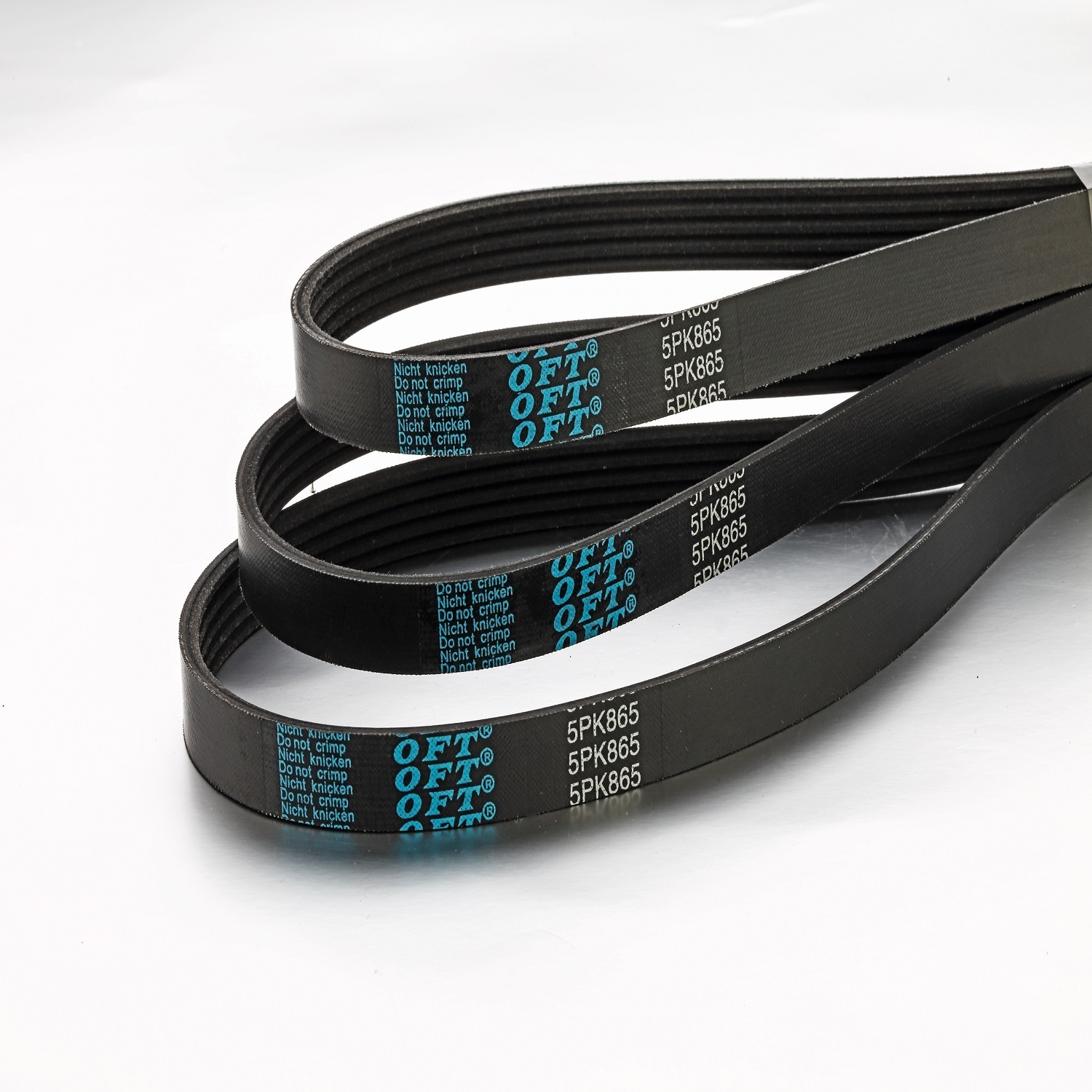
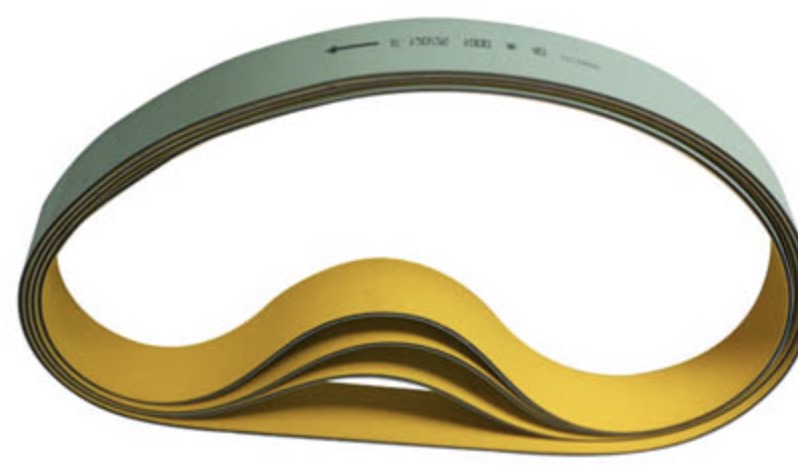
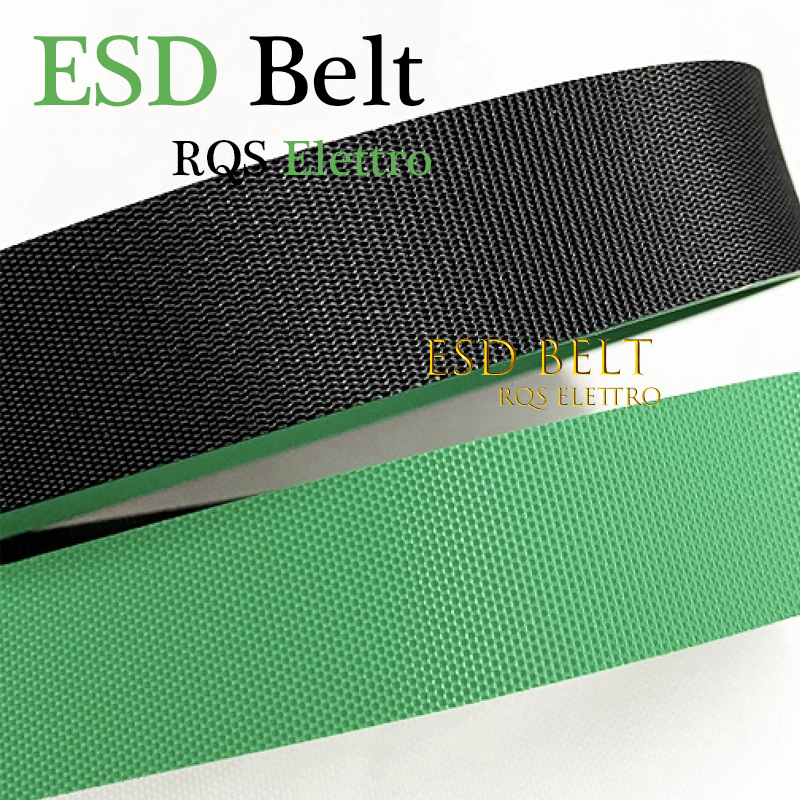
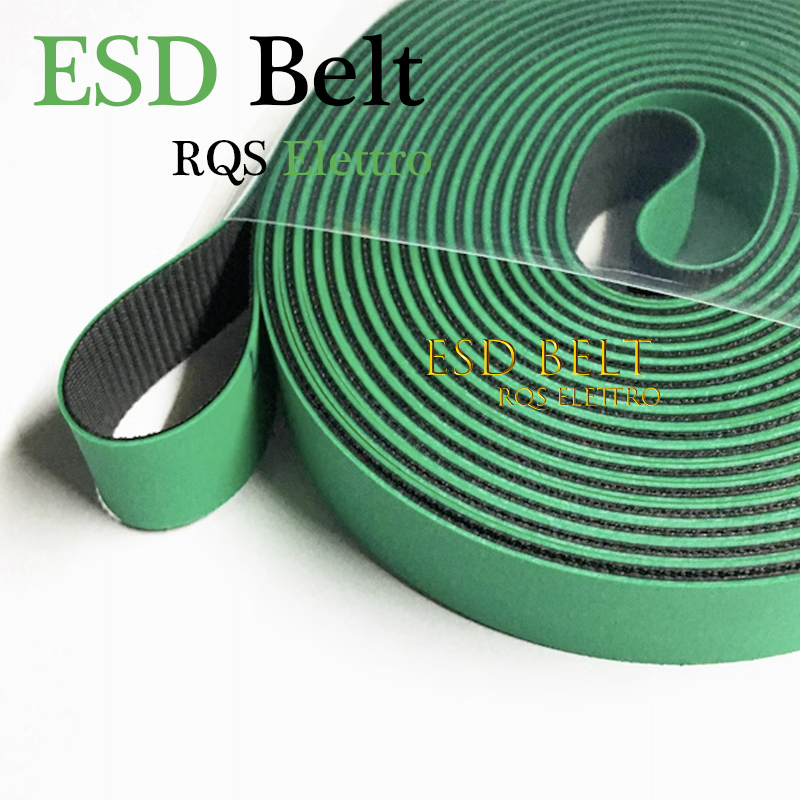
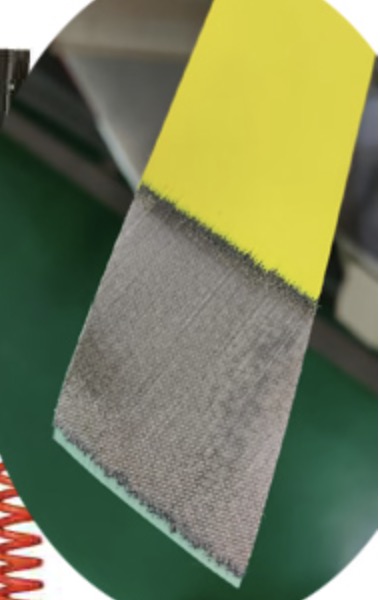
1、 Adhesive method for rubber beltsThere are many bonding methods for rubber belts, among which lap bonding and shrink bonding are two commonly used methods. Lap bonding is the process of overlapping two ends together and using glue to bond them together; Reduced diameter bonding involves reducing the diameter of both ends by a certain proportion, and then using glue to bond them together.2、 Preparation before bondingWhether it is lap bonding or reduced diameter bonding, surface treatment is required for the rubber belt. Firstly, the surface of the rubber belt needs to be sanded to increase the adhesion of the adhesive. Then use a cleaning agent to clean the surface and remove oil and dust. Finally, ensure that the surface is dry, otherwise it will affect the quality of the bonding.3、 Lap bonding method
Why PU transmission belts can adapt to high load work
The ability of PU transmission belts (polyurethane transmission belts) to adapt to high load work is mainly attributed to the characteristics and advantages of their materials. The following are several key reasons why PU transmission belts can adapt to high load work:
Why is PU transmission belt so wear-resistant
The reason why polyurethane transmission belts (PU transmission belts) exhibit excellent wear resistance is determined by their multiple advantages in material properties and manufacturing processes. In the industrial field, wear resistance is one of the essential key properties of transmission belts, as it directly affects their service life, transmission efficiency, and system stability under high loads, high speeds, and harsh environmental conditions.Firstly, polyurethane materials themselves have excellent wear resistance. Polyurethane is a polymer material with a chemically stable and compact molecular structure, exhibiting high wear resistance. This enables PU transmission belts to reduce wear when in contact with other surfaces, making it less prone to producing wear particles or debris, thereby extending the lifespan of the transmission belt.Secondly, the high-precision process in the manufacturing of PU transmission belts is also an important guarantee for their wear resistance. The process of manufacturing PU transmission belts usually involves steps such as extruding, forming, and processing polyurethane materials to ensure that the structure of the transmission belt is uniform and dense. This manufacturing process ensures that the surface of the transmission belt is smooth and uniform, thereby reducing friction with other surfaces and reducing the possibility of wear.In addition, PU drive belts typically have a lower coefficient of friction. The coefficient of friction refers to the ratio of the frictional force generated by relative sliding between two objects to the normal pressure. A lower friction coefficient means that when the drive belt comes into contact with other components, the friction loss is relatively small, thereby reducing the degree of wear.On the other hand, the elasticity of PU transmission belts under high load working conditions also plays a positive role in wear resistance. When the transmission belt is under load, its small bending and deformation can disperse stress, avoid concentrated wear and damage, and thus protect the integrity of the surface of the transmission belt.Overall, the reason why PU transmission belts are wear-resistant is due to the comprehensive effect of multiple factors such as the wear resistance of the material itself, the precision of the manufacturing process, low friction coefficient, and elasticity under high load working conditions. This makes PU transmission belts a reliable choice in industrial applications, able to maintain long-term service life and stable transmission efficiency in harsh environments.
The Origin of PU Drive Belt
Polyurethane transmission belts (PU transmission belts), as a high-performance transmission component, can be traced back to the development of polyurethane materials and the demand for industrial applications.Polyurethane, as a polymer material, was first discovered in the 1930s and gradually applied in different fields. Initially, polyurethane was mainly used to manufacture products such as elastomers, coatings, adhesives, etc. With the development of materials science, people gradually realize that polyurethane has excellent wear resistance, oil resistance, chemical corrosion resistance, and other characteristics, paving the way for its application in the field of transmission belts.In the 1970s, with the advancement of industrial automation and mechanization, higher requirements were put forward for the performance and reliability of transmission systems. Traditional transmission belt materials such as rubber and leather no longer meet the requirements in certain applications, so scientists and engineers have begun to research and develop new types of transmission belt materials. In this context, polyurethane materials have gradually gained attention due to their excellent performance and have been introduced into the manufacturing of transmission belts.The initial use of PU transmission belts may have been in specific applications in industrial equipment, such as food processing, textiles, printing, and other fields. With a deeper understanding of the properties of PU materials and improvements in manufacturing technology, the application range of PU transmission belts is gradually expanding, covering more industrial fields.Today, PU transmission belts have become an indispensable part of the industrial field, widely used in various mechanical equipment and production lines, providing stable and efficient power transmission for transmission systems. Its excellent wear resistance, oil resistance, chemical corrosion resistance, and adaptability to high load work make PU transmission belts play an important role in modern industry.In summary, the origin of PU transmission belts can be traced back to the development of polyurethane materials and the demand for industrial applications. With the continuous progress of material science and manufacturing technology, PU transmission belts have gradually developed and become an important component of modern industry.
Why PU transmission belts (polyurethane transmission belts) can adapt to high load work
When discussing the adaptability of PU transmission belts (polyurethane transmission belts) to high load work, we need to have a deep understanding of their material characteristics and working principles. The reason why PU transmission belts can perform well in high load working environments is due to a series of excellent properties of polyurethane materials.Firstly, polyurethane materials have excellent tensile strength and tear resistance. Under high loads, the drive belt may withstand significant tensile and compressive forces, and the high strength of PU material enables it to effectively disperse and withstand these mechanical stresses. This prevents the fracture or deformation of the transmission belt, ensuring the stability and reliability of the transmission system.Secondly, the wear resistance of PU transmission belts is one of the key factors that make them suitable for high load work. Under high load conditions, the drive belt may come into contact and friction with other surfaces, which may lead to wear and damage. However, the wear resistance of PU materials enables the transmission belt to maintain surface integrity during prolonged high load work, extending its service life and maintaining transmission efficiency.Its elasticity and deformation ability have also played a positive role in adapting to high load work. When the transmission belt is under load, PU material has a certain degree of elasticity, allowing it to bend and deform slightly, thereby dispersing stress and reducing impact. This helps the drive belt maintain relatively stable operation under high load impact loads, reducing the risk of stress concentration and damage.In addition, the chemical corrosion resistance and temperature stability of PU transmission belts are also important factors for adapting to high load work. In applications involving chemicals or high-temperature environments, PU materials can maintain their performance and structural integrity without failure due to external factors.Overall, the reason why PU transmission belts can adapt to high load work is due to the comprehensive effects of their materials’ high strength, wear resistance, elasticity, chemical corrosion resistance, and temperature stability. These advantages make PU transmission belts a reliable choice for many high-load industrial applications, ensuring the sustainability, stability, and efficient performance of transmission systems.
Which is better between PU transmission belt and PVC
Both PU belts (polyurethane belts) and PVC belts are common transmission elements in industrial applications, but they have some differences in performance and application. Here are some key factors comparing them: 1.Abrasion resistance and durability: PU drive belts generally have better wear resistance than PVC drive belts, especially under high load and high speed operating conditions. This makes PU drive belts perform better in long-running and heavy-duty applications. 2.Oil and Chemical Resistance: PU drive belts are generally better than PVC drive belts in oil and chemical resistance. PU materials have higher chemical stability and can maintain better performance when in contact with oils, solvents and chemicals. 3.Temperature tolerance: PU drive belts generally have better high temperature resistance and are able to work at higher temperatures without losing performance. The temperature resistance of PVC transmission belts is relatively low. 4.Friction properties: PU drive belts generally have a lower coefficient of friction, which may lead to higher transmission efficiency in some applications. PVC drive belts have a relatively high coefficient of friction. 5.cost: In general, PVC drive belts may cost less, but when considering long-term durability and performance needs, PU drive belts may be more competitive in total cost. 6.Application fields: PU transmission belts are often used in industrial applications that require high wear resistance, high strength and high temperature resistance, such as food processing, textiles, printing, conveyor belts, etc. PVC transmission belts are suitable for some low-load, low-speed, general-environment applications. When choosing PU transmission belt or PVC transmission belt, it is necessary to comprehensively consider the required performance, application environment, budget and expected service life and other factors. The best choice depends on specific application requirements.
Wear-resistant and oil-resistant industrial power transmission tool
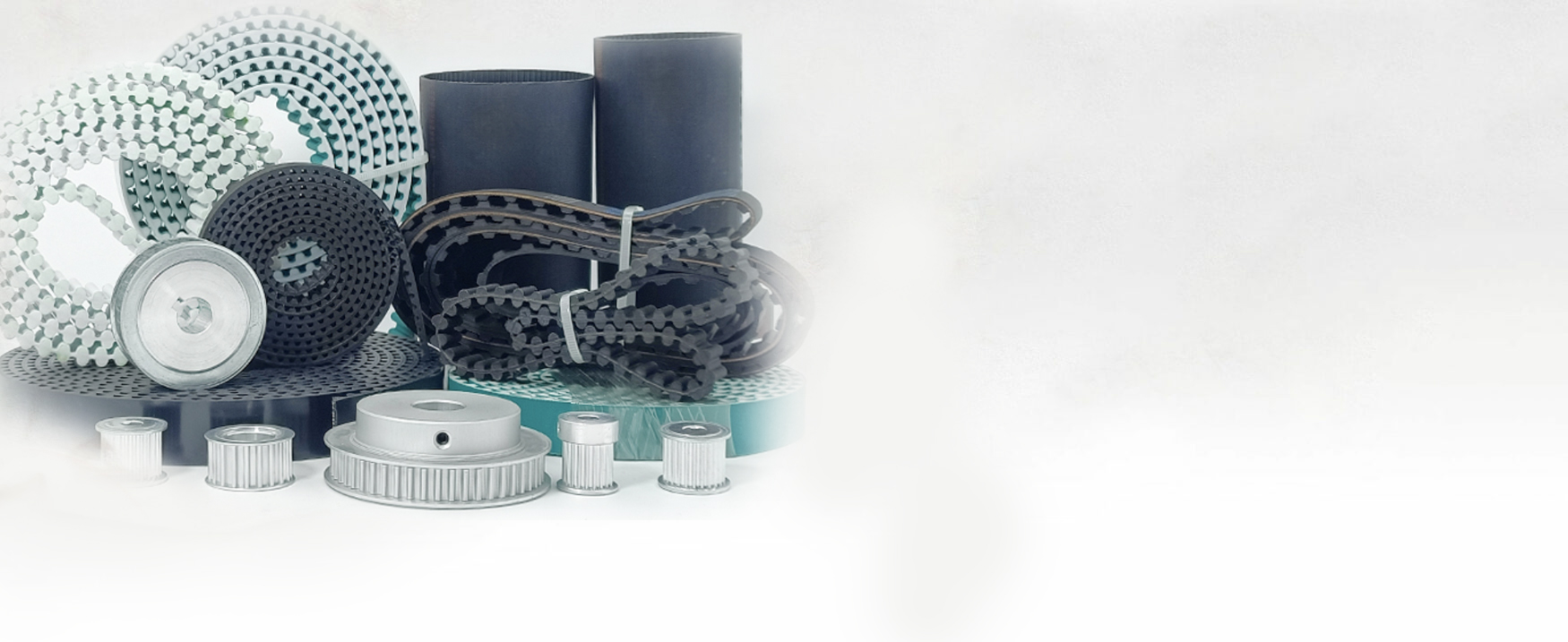
PU transmission belt is a type of transmission belt made of polyurethane (PU) material, used to transmit power or drive mechanical motion components. PU transmission belts are widely used in the industrial field, and their main characteristics include wear resistance, oil resistance, chemical corrosion resistance, and high temperature resistance.Here is some information about PU drive belts:Material characteristics: Polyurethane is a high-performance polymer material with excellent wear resistance, heat resistance, tensile strength, and chemical corrosion resistance. This makes PU transmission belts widely used in applications that require high strength and durability.Usage: PU transmission belts are usually used to drive mechanical equipment, such as conveyor belts, food processing equipment, textile machinery, printing machinery, automated production lines, etc. Its superior wear resistance and oil resistance make it particularly suitable for environments that require long-term operation.Advantages: Compared to other materials such as rubber, PU transmission belts perform better at high temperatures, while also having lower friction coefficients and better tensile strength. These characteristics make it perform well in high load and high-speed applications.Type: PU transmission belts come in various types, such as V-belts, circular belts, flat belts, etc. You can choose the appropriate type according to different application needs.Installation and maintenance: Installing PU drive belts requires a certain level of professional skills to ensure correct tension and alignment to ensure transmission efficiency and lifespan. In terms of maintenance, regularly check the wear and tightness of the belt, and replace damaged transmission belts in a timely manner to maintain the normal operation of the equipment.Market supply: PU drive belts are widely used in the industrial equipment and machinery markets, and many suppliers provide PU drive belts of different specifications and sizes to meet the needs of different industries.It should be noted that although PU transmission belts have many advantages, they still need to consider practical application situations when selecting and using them to ensure that they can achieve the expected effects and lifespan.
When did humans start using conveyor belts to save manpower
As a mechanical device used for transporting goods, conveyor belts can be traced back to human pursuit of mechanization and automation. Human beings have gradually developed various forms of conveyor belts in different historical periods and cultural backgrounds to save manpower, improve production efficiency, and improve working conditions. The evolution of conveyor belts from simple manual operations to modern highly automated production lines reflects the process of human industrialization and technological development.In the early stages of human history, people often relied on manual labor to complete various tasks, such as transporting goods and processing raw materials. However, with the development of society and the increasing demand for labor, people are beginning to seek more efficient production methods. Some engineering and installations in ancient civilization, such as water turbines in ancient Egypt and screw conveyors in ancient Greece, early demonstrated the embryonic concept of conveyor belts.The arrival of the Industrial Revolution laid a solid foundation for the development of conveyor belts. From the late 18th century to the early 19th century, the emergence of steam engines and mechanization led to the beginning of modern industry. During this period, people began to use conveyor belts for material transportation and processing in fields such as mining, metallurgy, and agriculture, greatly improving production efficiency. For example, in 1795, British engineer Henry Boden invented a wooden conveyor belt for coal mines, which was used to transport coal from deep wells to the ground, greatly reducing human labor.At the beginning of the 20th century, with the progress of engineering technology and material science, the design and manufacturing of conveyor belts underwent greater development. In the context of large-scale industrial production, conveyor belts are widely used in fields such as automobile manufacturing, steel production, food processing, etc., achieving automation and efficient production. Especially in the mid to late 20th century, the rise of assembly line production mode made conveyor belts a core component of production lines, greatly improving the production efficiency of factories.With the rapid development of information technology, the automation level of conveyor belts has further improved. The introduction of computer control systems enables conveyor belts to sort, locate, and transport materials more accurately, achieving a higher level of production automation. At the same time, the progress of material science has also provided more possibilities for the wear resistance, high temperature resistance, chemical corrosion resistance, and other properties of conveyor belts.The evolution of conveyor belts reflects humanity’s continuous pursuit of improving production efficiency and saving labor costs. From the earliest simple mechanical devices to modern highly intelligent automatic production lines, conveyor belts play an important role in the industrialization process. It not only changed the pattern of manufacturing, but also had a profound impact on the economic development and lifestyle of human society. With the continuous progress of technology, conveyor belts will continue to develop in the future, creating more efficient and intelligent production methods for humanity.

9 points on temperature resistance technology of rubber belts
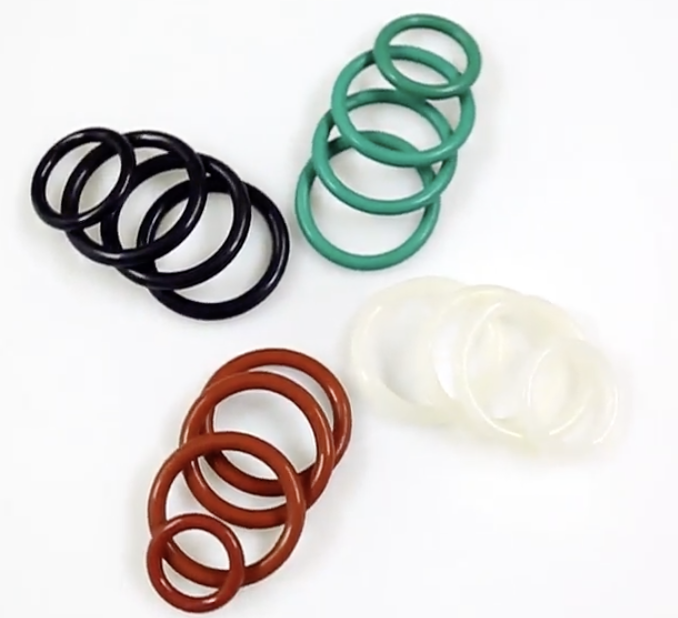
Rubber belts have certain technical requirements for durability and performance under different temperature conditions. The following are some considerations for temperature resistance technology of rubber belts:Rubber material selection: Choosing rubber materials suitable for high-temperature environments is crucial. Common high-temperature resistant rubber materials include silicone rubber, fluororubber, Neoprene, etc. These materials have high thermal stability and temperature resistance.Additive formula: Special additives can be added to rubber products to enhance their temperature resistance. For example, high-temperature plasticizers, heat-resistant fillers, and oxidizing agents can be added to improve the temperature stability of rubber.Structural design: The structural design of rubber belts also affects their temperature resistance performance. For example, by selecting appropriate reinforcement layers and adhesive layer structures, the temperature resistance of rubber belts can be improved. At the same time, special adhesives and bonding processes can also be used to enhance the bonding strength and temperature resistance between rubber layers.Surface coating: For rubber belts that need to operate in high-temperature environments, a high-temperature resistant protective coating can be applied to their surface. These coatings can provide additional thermal protection and wear resistance, extending the service life of rubber belts.Temperature monitoring and control: During the use of rubber belts, temperature monitoring and control are also important. Temperature sensors can be used to monitor the surface temperature of the rubber belt and control the temperature through appropriate cooling systems or insulation measures to ensure that the rubber belt operates within a safe temperature range.Temperature range: Different rubber materials and rubber belts have different temperature resistance ranges. When choosing a rubber belt, it is necessary to understand the maximum and minimum temperatures it can withstand. This can ensure that the rubber belt is not affected by temperature and will not experience performance loss or damage under normal working conditions.Thermal conductivity: Rubber belts may cause heat accumulation and conduction in high-temperature environments, thereby affecting their performance and lifespan. Therefore, it is necessary to consider the thermal conductivity of rubber materials to avoid overheating or the generation of local hot spots. Proper heat conduction design can improve the heat dissipation capacity of rubber belts and maintain temperature stability.Thermal expansion coefficient: Rubber materials will expand when heated, which may affect the dimensional stability and operating accuracy of rubber belts. Therefore, it is necessary to consider the thermal expansion coefficient of rubber materials and take corresponding compensation measures in the design to ensure that the rubber belt maintains appropriate size and shape at different temperatures.Lubrication and cooling in high-temperature environments: In high-temperature environments, rubber belts may require appropriate lubrication and cooling to maintain their performance and lifespan. Choose lubricants suitable for high-temperature environments and ensure that the cooling system around the rubber belt operates normally to avoid overheating and damage.It should be noted that different rubber materials and application environments may have different temperature resistance limitations. Therefore, when selecting and applying rubber belts, it is recommended to refer to relevant technical specifications and temperature resistance guidance provided by manufacturers to ensure that the rubber belt can operate within an appropriate temperature range to ensure its performance and lifespan.
7 points on the production process of rubber belts
The production process of rubber belts usually includes the following steps: