
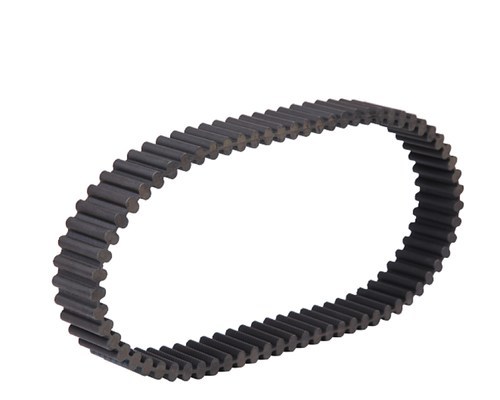
Friends who often use polyurethane timing belts for transmission will know that it has the following transmission characteristics (or advantages) like other timing belt transmissions: 1. Accurate transmission, suitable for high-speed operation, and high transmission efficiency; 2. Easy maintenance, no need to add lubricating oil, can keep the machine clean; 3. The transmission structure is compact, the weight of the synchronous belt is light, the thickness of the belt is thin, and the flexibility is good, which can reduce the weight of the transmission mechanism; 4. Small impact, large speed ratio, large load range, and low operating noise, etc. The polyurethane timing belts we produce also have physical and chemical characteristics such as good wear resistance (no powder drop), anti-aging, anti-ultraviolet UVA, anti-ozone, highly oil-resistant, and anti-corrosion of most acids and alkalis. After we have learned about the excellent performance characteristics of so many PU timing belts, are you curious whether there are no shortcomings in polyurethane timing belts? The answer is no, polyurethane (PU) timing belts are not perfect and unbeatable. The disadvantages of polyurethane timing belts are: 1. Compared with rubber materials, polyurethane is not resistant to water; 2. Polyurethane (PU) synchronous belt generates large internal heat after multiple flexing; 3. Poor high and low temperature resistance, the temperature range used is: -5 °C ~ 80 °C, and the instantaneous temperature can withstand 110 °C.
What are the advantages of polyurethane timing belts in practical use?
Polyurethane synchronous belt is a kind of belt with excellent new performance that is often used in industrial production and manufacturing with accurate transmission, no slippage, convenient maintenance, compact structure and low noise. The synchronous belt is generally made of steel wire rope or glass fiber as a strong layer, the outer surface is covered with polyurethane or rubber, and the inner circumference is made into a tooth shape to engage with the toothed pulley. The international standard ISO 5296 is the first standard for timing belts. The polyurethane timing belt we produce has: good wear resistance (no powder drop), anti-aging, anti-ultraviolet UVA, anti-ozone, highly oil-proof, anti-corrosion of most acids and alkalis, working temperature: -5℃~+80 ℃ and other good performance characteristics. The advantages of using polyurethane timing belts in our machinery and equipment are as follows: 1. The impact of the polyurethane timing belt is small when it is running, and there is no phenomenon of up and down jumping in the chain drive season. Therefore, the timing belt is driven smoothly and has little impact. 2. Polyurethane (PU) timing belts do not need lubrication, and can play a very good role in some high-speed transmission machinery. 3. The synchronous belt has a compact structure and requires a small installation space, which can effectively meet the requirements of machinery with limited installation space. 4. It can effectively reduce the weight of the transmission mechanism. The use of polyurethane ratio belt transmission can use aluminum alloy or plastic pulleys. Therefore, when the same power is transmitted, the use of PU timing belts can reduce the weight of the transmission mechanism.