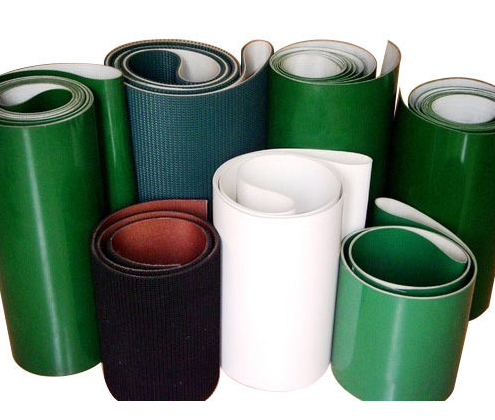
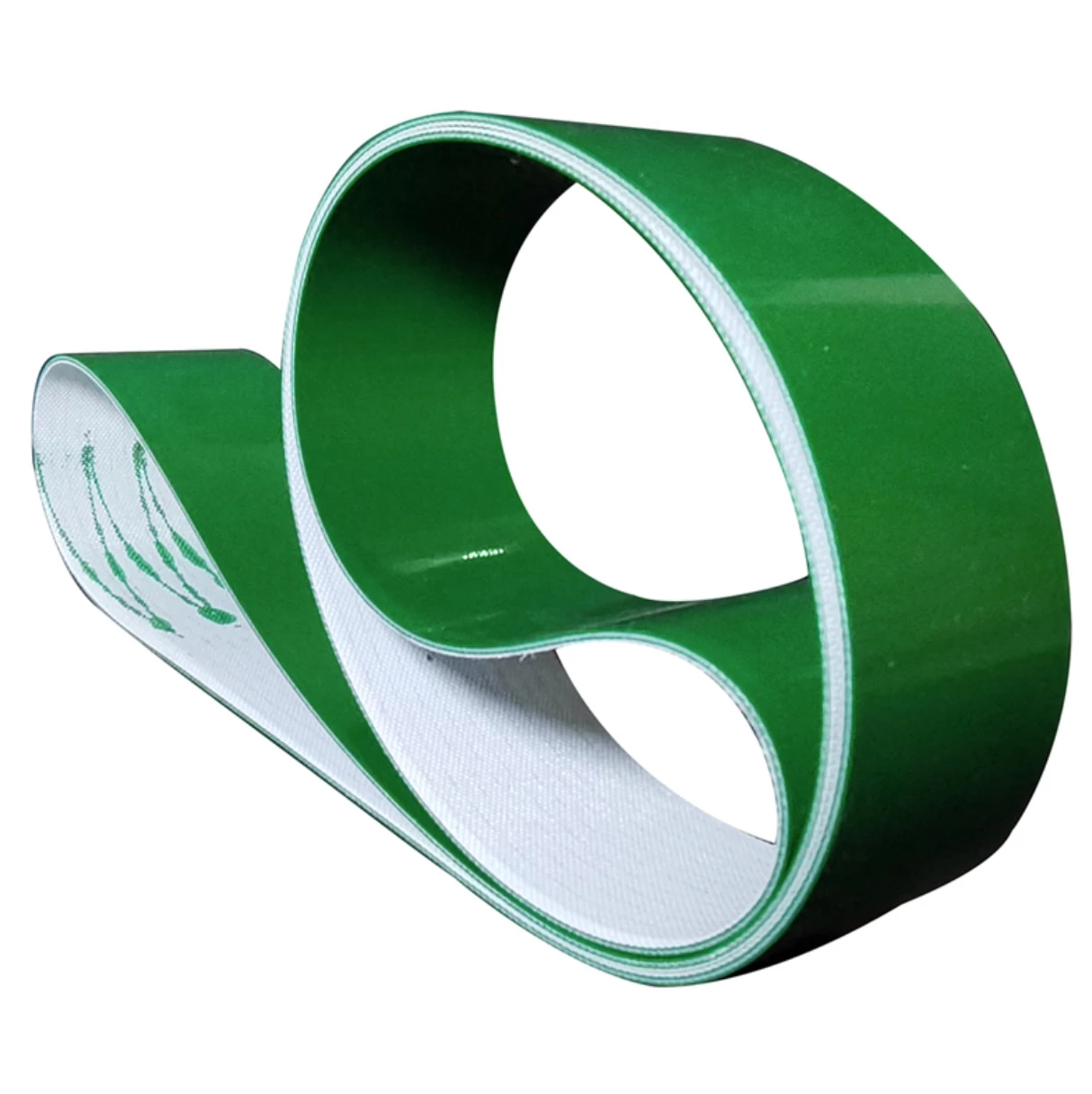
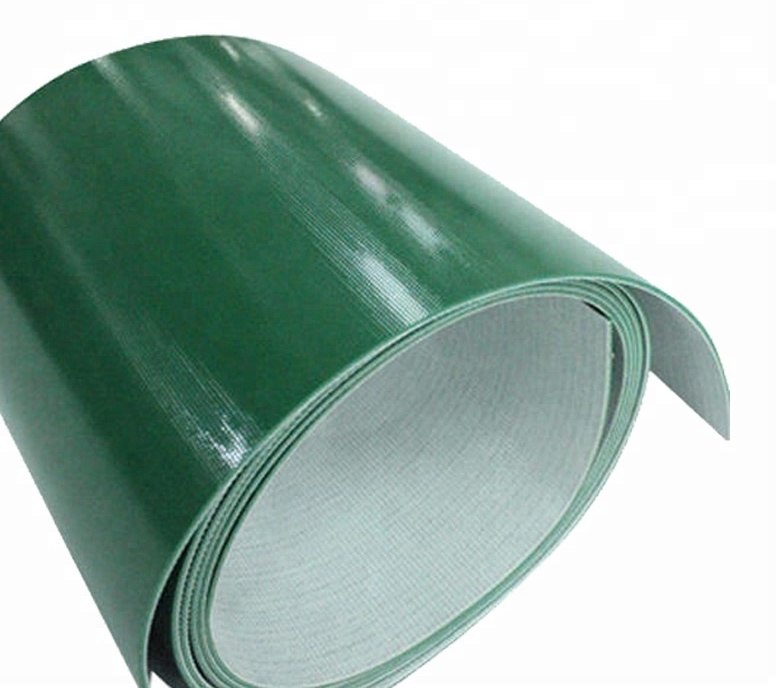
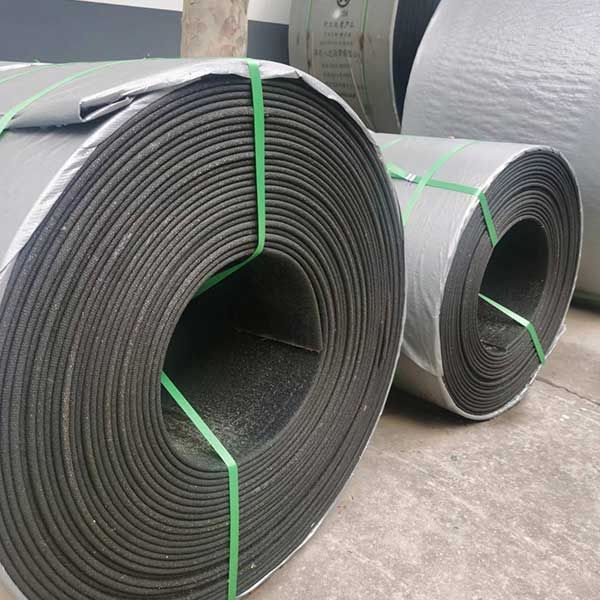
In order to ensure the efficiency of production, we should do a good job of cooling and maintenance of the conveyor belt when using the pvc conveyor belt. Note the following: 1. What is the temperature resistance of the PVC conveyor belt? The operating temperature of the pvc conveyor belt is between -10°C and 80°C. During production, attention should be paid to its working temperature. Especially in hot summer, it should not be driven too fast or for too long, otherwise it is prone to cracking and hardening. . 2. When using or saving the pvc conveyor belt, it should avoid direct sunlight and humid environment, and avoid environmental influences that lead to rapid aging of the conveyor belt. 3. In summer, using pvc conveyor belt to reduce the indoor temperature can speed up the cooling of the conveyor belt and avoid excessive heat generated by the conveyor belt during use.
Are you still worried about the broken conveyor belt?
Note the following Reasons for conveyor belt breakage: 1. The tension of the conveyor belt is not enough. 2. The conveyor belt is overloaded or used over time. 3. The material is stuck or punched. 4. The quality of the conveyor belt joint does not meet the requirements; the joint is seriously deformed or damaged. 5. The conveyor belt is stuck. 6. The tension of the conveyor belt is too large. How to prevent conveyor belt breakage? 1. Replace the conveyor belt in time, and pay attention to whether the new belt meets the requirements. 2. Strictly check whether there is any material residue on the conveyor belt. 3. Regularly check the joint of the conveyor belt and replace the damaged joint in time. 4. The tensioning adjustment of the tensioning device is appropriate, and it should not be too large or too small. 5. Add deviation adjustment drag rollers and anti-deviation protection devices; if the conveyor belt is found to be stuck by the frame, it should be stopped immediately.
How to measure the size of the conveyor belt on the machine ?
When we replace the conveyor belt on the machine, but we do not know the size of the conveyor belt, we need to measure the length, width and thickness of the conveyor belt, so as to better adapt the new conveyor belt. Usually, a replacement belt is purchased when the belt is still running, which can reduce unnecessary downtime. Then, measure the belt on the machine without removing the belt. Here is how to measure the size of the belt on the machine. 1. Length measurement of conveyor belt: The best way to measure the length is to make a mark on the side of the conveyor belt, measure the length at intervals, until you turn back to the first mark, and these measurements add up to the length of the conveyor belt. This method is relatively accurate, and is the best method for measuring lengths on our machines. Second, the conveyor belt width measurement: When measuring the width, it is necessary to check whether the edge of the conveyor belt is worn. If there is wear, it may change the width of the original conveyor belt. In addition, check the width of the conveyor belt and the width of the rollers to see if they match. Solve these problems well, and the measured size is more accurate. At the same time, when we order conveyor belts, we can not only adapt the length and width to the manufacturer, but also need to adapt better conveyor belt products for you according to the industry, use, function and many other factors.
Frozen cold resistant conveyor belt introduction
In fact, to put it simply, the frozen and cold-resistant conveyor belt can transport materials in places where the temperature is relatively low. Generally, this cold-resistant rubber belt product can be lower than 20° or 40°C. It is said that it is subzero, of course it is different. The quality of products produced by manufacturers and the temperature of transportation are different, but no matter which manufacturer produces, they must follow the basic characteristics and standards of the product. Generally, we commonly use two grades of products including c1 and c2. The temperature is also different. Generally, the products of h, d, and l are used, which have high strength, fatigue resistance, and certain flexibility. The low-temperature resistant conveyor belt produced by some manufacturers can be used in the environment of minus 60°. The common materials are cotton canvas, nylon canvas, polyester canvas and other types of products used together. It can be used and the configuration is reasonable.
Introduction to the types of commonly used conveyor belts
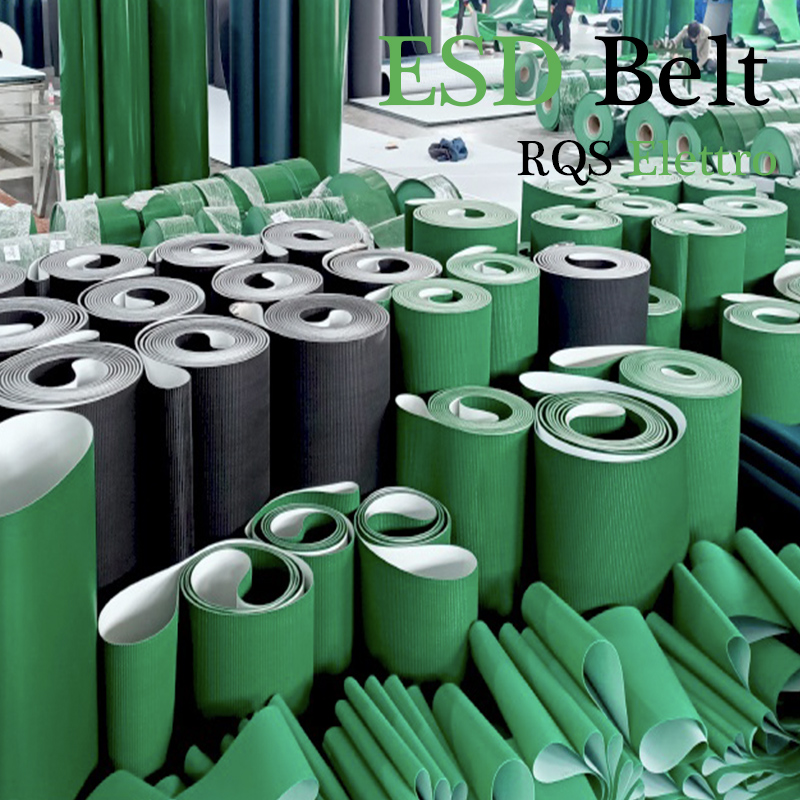
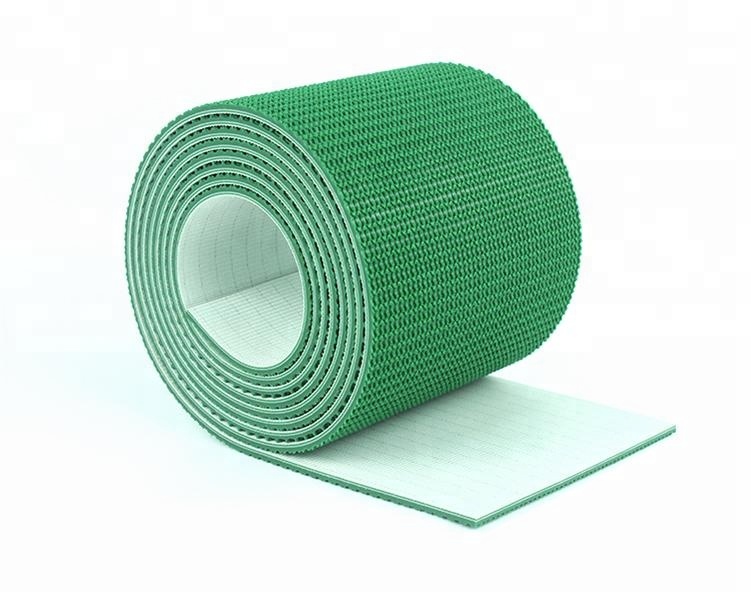
The application of the conveyor belt is an inevitable accessory for the development of the assembly line. Through continuous research and development, improvement, and improvement of the conveyor belt, there are now many excellent types and models that are used in various industries. Here are a few for you. High temperature resistant conveyor belt Heat-resistant conveyor belts are conveyor belts used in special environments. During production, four materials are commonly used for production, namely PVC, PU, PE, and silica gel. They are economical and affordable. The price of the conveyor belt should consider the cost in actual use. Therefore, economy must be considered; easy to process, PVC is relatively easy to process during processing, and has good plasticity; acid and alkali resistance, PVC has stable chemical properties, and has a certain ability to resist weak acids and weak bases. sidewall conveyor belt In order to prevent the material from slipping from both sides during the conveying process, ribs are added on both sides, so that the material can avoid falling waste and protect the environment. Pattern conveyor belt All conveyor belts whose surface is not flat are collectively referred to as patterned conveyor belts. According to actual needs, there are often herringbone patterns, convex points, concave points, and one-character patterns. Since the pattern is added to the surface of the patterned belt, the frictional force becomes larger, which can increase the frictional force of the goods on the conveyor belt, and the conveying effect is better. Large inclination conveyor belt In order to convey the goods in a state of large inclination upward, a conveyor belt with a large inclination is designed. Because there is a baffle inside, it can prevent the material from slipping down within a certain angle. Acid and alkali resistant conveyor belt In some special places, due to the limitation of the environment, it is necessary to use anti-corrosion products. The acid and alkali resistant conveyor belt is a kind of conveyor belt that can operate in a special environment.

New artificial cowhide nylon sheet base belt
With the development of science and technology and the high requirements for transmission devices and transmission accessories, more and more new industrial belts have been developed, and many new types of flat transmission belts have also been added. Today we are going to talk about a new type of flat transmission belt product – artificial cowhide flat transmission belt. The artificial cowhide flat belt is developed on the basis of the cowhide flat belt. The traditional “true” cowhide belt has good wear resistance, good temperature resistance, stable transmission performance, scratch resistance, and can be well adapted to harsh environments. However, it also has its shortcomings: there are too many joints in the cowhide layer, and the joints are more prone to delamination than other parts, which is not conducive to the service life of the flat transmission belt. The newly developed artificial cowhide belt mainly starts from the cowhide layer of the cowhide belt. After rigorous analysis and testing, it was found that a high-strength wear-resistant fiber can well replace the original cowhide layer. Because it is a man-made high-wear-resistant fiber, no matter how long the production length is, there will be no trouble with joints during production, and more importantly, the flat transmission belt produced by this material is better than the original traditional cowhide belt. It has the characteristics of more wear resistance, more temperature resistance, and better adaptability to harsh working environments. The artificial cowhide belt has few joints (the open plane transmission belt is generally processed into an endless belt and then used, so the general annular plane transmission belt will have a joint), compared with the real cowhide belt with more joints in the cowhide layer. Smooth and stable, and the belt has a longer service life and is more cost-effective.
What are the performance requirements of textile machinery spindle belts?
If you are in the textile industry, you should know that the spindle belt is a kind of flat transmission belt in the textile machinery, which can be one of a woven belt or a nylon sheet-based flat belt. Spindle belts are used in a large amount in textile machinery and equipment. For example, spinning machines, twisting machines, stretching-twisting machines, etc. all use spindles to drive spindles. Due to the large amount of use and the increasing requirements of mechanical equipment for belts, how to improve the quality and transmission efficiency of the spindle belt and prolong its service life is an important part of the production and development of flat transmission belts. With the development of textile machinery in the direction of higher speed, high efficiency, large package and high power, higher requirements are put forward for spindle belts, especially wool spinning machinery, rope twisting machine and chemical fiber machinery. The inertia is large, and the spindle must be equipped with a braking device. When the yarn breaks, the braking stops the spindle and during the process of extubation and re-heading, a large sliding friction is generated between the spindle belt and the spindle disc, and high temperature is also generated. In this case, the general spindle belt is prone to wear and even breakage. Therefore, this requires us to choose those flat transmission belts with good heat resistance and wear resistance as the spindle belt for spinning.
Advantages and disadvantages of different strength layers of polyurethane (PU) timing belts
The tenacity layer of the polyurethane timing belt can be divided into three types, one is high-strength steel wire, one is glass fiber rope, and the other is polyester thread. First, let’s learn: polyester cord. Polyester has the characteristics of good processability as a strength layer, and it is suitable for light loads. The disadvantage is: large elongation. We all know that the timing belt is a kind of meshing belt that requires very high precision, which requires the polyurethane timing belt to have very low tensile and elongation. The two types of strength layers described below have better performance characteristics than polyester cords. Strong steel wire layer. As a strength layer, it has the advantages of very small elongation, high tensile strength, good heat resistance, and good dimensional stability. The core is exposed, mainly do not let it get wet or water, otherwise it will affect its performance. Fiberglass cord. It also has excellent performance characteristics of very small elongation, high tensile strength, good heat resistance and good dimensional stability, but compared with steel wire rope, it has poor temperature resistance, poor tortuosity, and relatively low impact resistance. Poor disadvantage. These materials have their own characteristics, and you need to make a reasonable choice according to the specific situation of your equipment.
Advantages and disadvantages of polyurethane synchronous belt steel core compared with fiber core
We all know that if we want to use a thing well, we must first understand that thing, so today we will take you to understand the strength layer of polyurethane timing belt. The tenacity layer of the polyurethane (PU) timing belt can be divided into three types (one is high-strength steel wire, one is glass fiber rope, and the other is polyester thread). Now we mainly talk about the main advantages and disadvantages of steel wire core and glass fiber core. As a strength layer, the strong steel wire layer has the advantages of very small elongation, high tensile strength, good heat resistance and good dimensional stability. It is a very good material for the strength layer of the synchronous belt, but it also has some shortcomings: As a steel wire, some of its excellent properties will be reduced when it is damp or water. The glass fiber rope also has some excellent properties of the steel wire core, but compared with the steel wire rope, its temperature resistance is poor, the tortuosity is poor, and the impact resistance is relatively poor. After referring to the above information, are you sure about the choice of the strength layer of the polyurethane timing belt? If you have any other questions related to industrial belts, please come to consult!
Polyurethane timing belt
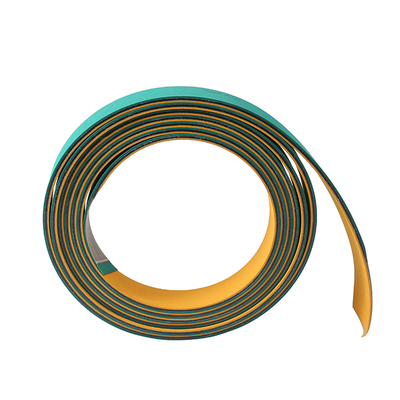
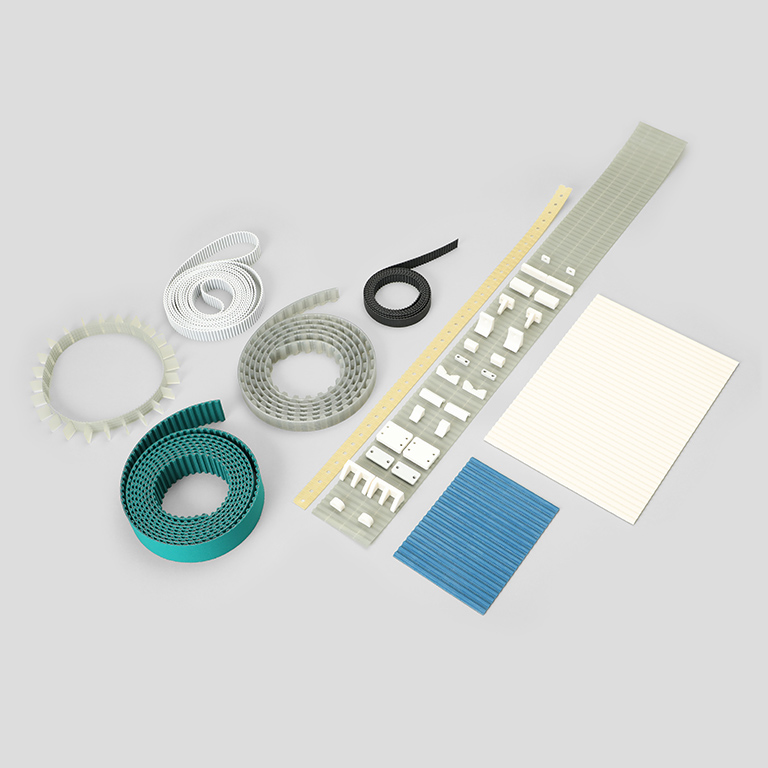
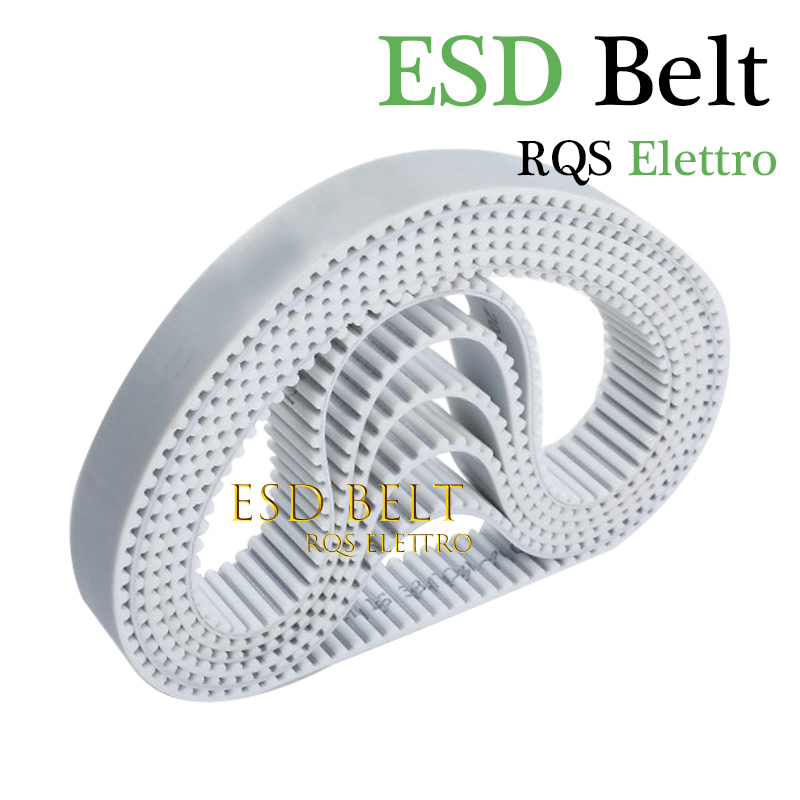
Polyurethane timing belt is made of thermoplastic polyurethane (PU) as the main material, which has good oil resistance and is used at a temperature of -30°C to 80°C. Polyurethane (PU) timing belts on the market are mostly white, and we can make them into other colors according to the different needs of different users! Our industrial belts can cast bumps on the back of the polyurethane timing belt according to different usage requirements to send signals regularly or cast various connection blocks on the back of the belt to transport products or connect other components. The tenacity layer of the polyurethane timing belt can be divided into three types, one is high-strength steel wire, one is glass fiber rope, and the other is polyester thread. The strong steel wire layer as a strength layer has the advantages of very small elongation, high tensile strength, good heat resistance and good dimensional stability, etc. It is a very good material for the strength layer of the synchronous belt; the glass fiber rope also has a steel wire core It has some excellent properties, but it has poor temperature resistance, poor tortuosity, and relatively poor impact resistance compared with steel wire ropes. Over the years, we have been strictly controlling the quality of our products, and our service tenet is “customers are a part of it, and doing everything for customers is our goal”, and we put our commitment to customers in the first place. Welcome to consult!